
Audio Damage Traverse: Lo-Fi Tape Delay Plugin
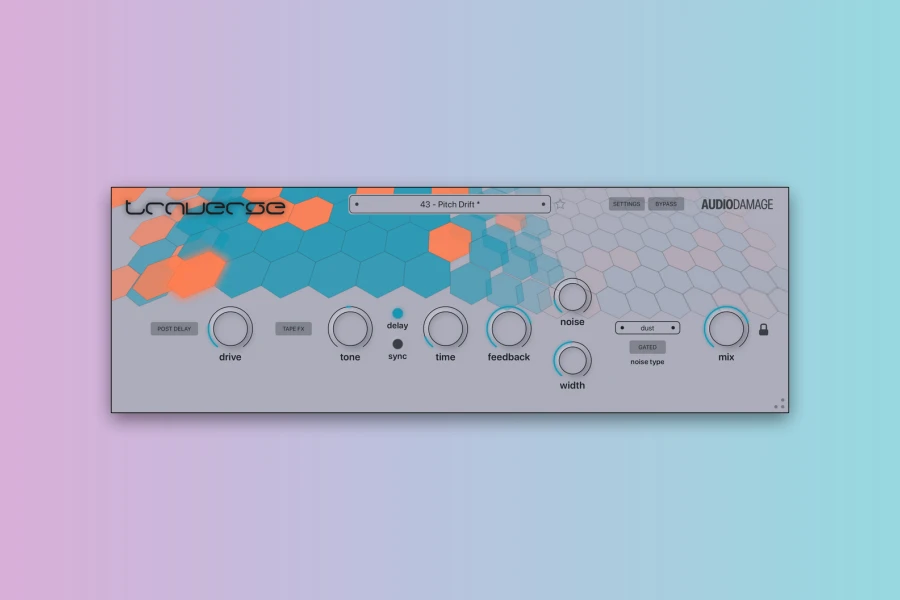
Audio Damage, a well-regarded developer in the electronic music community, has recently unveiled Traverse, an innovative lo-fi cassette effect and delay plugin. This new tool is available across multiple platforms, including macOS, Windows, Linux, and iOS, ensuring broad accessibility for producers. Traverse is designed to infuse tracks with the distinctive character of vintage tape, combining a detailed cassette simulation with a stereo tape-style delay. Consequently, every echo repeat is re-processed through the entire cassette chain, leading to a unique degradation, blooming, and saturation with each pass.
Deep Dive into the Cassette Engine
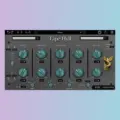
At its core, Traverse features a sophisticated cassette engine built around a magnetic-hysteresis tape model. This model employs state-dependent nonlinearity hysteresis equations, carefully wrapped between pre-emphasis and de-emphasis filters. Moreover, oversampling is applied at the saturator stage, contributing to its authentic sound. The Drive control allows users to dial in the cassette saturation, ranging from a pristine new tape sound to a fully compressed and harmonically rich texture. The hysteresis curve dynamically responds to the signal’s history, mimicking real tape behavior. Furthermore, independent Wow and Flutter controls provide depth for slow pitch drift and faster modulation jitter, respectively. Each is driven by its own LFO, layered with a noise component, creating a natural stereo wobble. A bipolar Tone tilt EQ is also integrated directly into the cassette signal flow, offering intuitive tonal shaping.
Integrated Delay and Unique Features
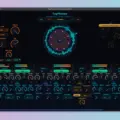
The plugin’s delay mechanism is seamlessly integrated, as the tape emulator resides within the feedback loop. This means that every repeat is continuously re-processed through the Drive, Tone, Wow, and Flutter parameters. Pushing the Feedback control can transform repeats into a self-saturating wash, while pulling it back yields distinct, colored echoes. The Time parameter offers stereo delay from 20 ms up to 10 seconds in free mode, or it can be synchronized to host tempo beat divisions. Additionally, Width provides continuous ping-pong control, sending the first echo to one channel and cross-feeding between them.Traverse also boasts a unique Splice system, a procedural tape splice simulator with four interacting controls. Users can adjust the event rate and depth, toggling pitch-chirp and amplitude-dip components to simulate anything from a clean spool to a heavily worn-out tape. In addition, a curated noise generator provides nine procedural noise voices, including Hiss, Crackle, Fan Rumble, and Card Reader. This noise feeds directly into the cassette path, getting shaped on every repeat. The Gated noise feature further refines this, dropping the noise floor when the input is silent, allowing room tone to appear only when the track is active.
Versatility and Application
The versatility of Traverse allows for a wide range of creative applications. For instance, producers can apply it to a drum bus to impart a aged, fourth-generation cassette dub quality to their beats. When used on vocals, it can introduce warmth, a subtle hum, and a tape-echo wash that complements rather than competes with the dry signal. Sending a clean synth pad through Traverse and increasing the splice rate, along with the Card Reader noise, can evoke a compelling broken-equipment aesthetic. Similarly, placing it on a guitar track and pushing the Drive can transform a single chord into a slow, self-saturating drone through the feedback path. This single plugin, with its focused signal flow and lack of chaining, opens up numerous possibilities for sound design.
Routing and Mix Options
The Post-delay routing toggle offers further flexibility. By default, it operates in a Space-Echo model, where the cassette processes the signal first, followed by the delay, with feedback returning through the full cassette chain. Toggling this option flips the order, allowing the cassette to process only the delay tail. This effectively transforms Traverse into a more conventional tape-flavored delay, maintaining a clean input path. A standard Mix control provides dry/wet blending, defaulting to fully wet for immediate effect. Furthermore, a click-free bypass with a smoothed 50 ms crossfade ensures seamless A/B comparisons and smooth live performance use.Features
- Cassette engine with magnetic-hysteresis tape model and oversampling
- Drive control for cassette saturation from clean to harmonically rich
- Independent Wow and Flutter controls with per-channel modulation
- Bipolar Tilt EQ (Tone) integrated into cassette signal flow
- Tape emulator within the feedback loop for degrading echoes
- Stereo delay Time from 20 ms to 10 seconds, with host-tempo sync
- Feedback control with ceiling-limited recirculation
- Width control for continuous ping-pong effect
- Procedural Splice system with four interacting controls (Time, Depth, Pitch, Amp)
- Curated noise generator with nine voices (Hiss, Crackle, Dust, Fan Rumble, Hums, White, Pink, Card Reader)
- Gated noise feature for dynamic noise floor control
- Post-delay routing toggle for flexible signal flow (cassette first/delay first)
- Mix control for dry/wet blending
- Click-free Bypass with 50 ms crossfade
Price
29.00 USD
👍 Pros
- ✓ Comprehensive cassette simulation with drive, wow, flutter, and tilt-EQ.
- ✓ Unique delay feedback loop where echoes degrade through the full cassette chain.
- ✓ Includes a sophisticated tape loop splice point emulator and curated noise generator.
👎 Cons
- ✗ Specific lo-fi aesthetic might not suit all production styles.
- ✗ The detailed controls might require a learning curve for new users.
More info: Audio Damage | Traverse