
AAP: Android Audio Plugin Format & UAPMD Host
The AAP Project has officially launched the 1.0 Preview of AAP: Audio Plugin For Android. This release includes UAPMD, a new cross-platform plugin host and sequencer. This initiative addresses a significant gap in the Android ecosystem. A standardized audio plugin format has long been absent there. AAP aims to establish a common framework for audio plugins. It is adapted specifically for Android applications, much like VST on Windows or AudioUnit on macOS/iOS. Consequently, it provides a comprehensive solution for mobile music production enthusiasts and developers alike.
Addressing the Android Audio Plugin Gap
Historically, Android devices have lacked a widely adopted audio plugin standard. This absence has limited the development of professional-grade music production applications on the platform. The AAP Project endeavors to rectify this. It offers an inclusive, permissive (MIT licensed) standard. This standard is designed to integrate seamlessly into the Android application ecosystem. Moreover, AAP is engineered to be compatible with features found in other popular formats such as VST3, LV2, and CLAP. However, its architecture is tailored for Android’s unique environment, drawing parallels to AudioUnit v3 on iOS.
AAP for Users: Plugins and Host
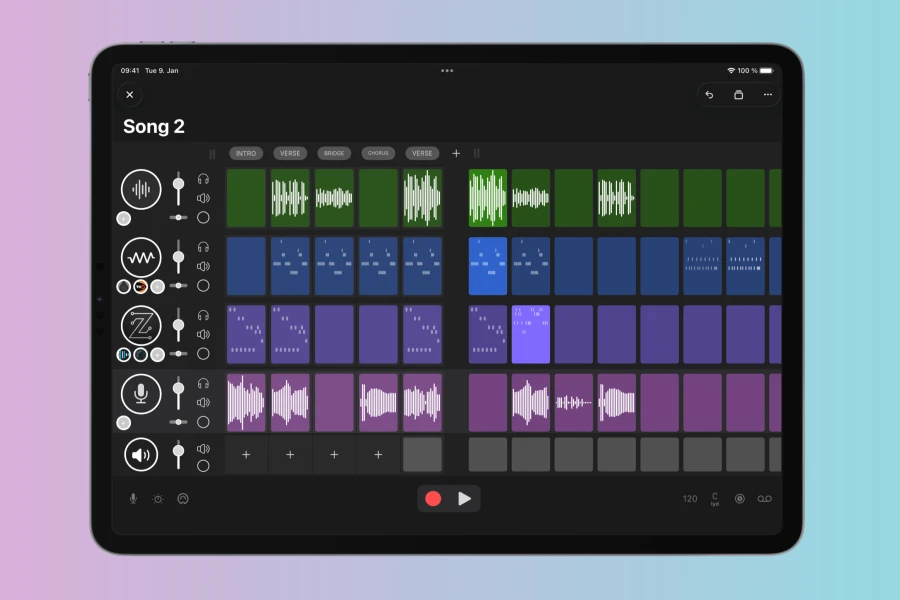
For general users, the AAP version 1.0 Preview introduces a selection of applications. Some are accessible via the Google Play Store. Notably, UAPMD serves as the reference plugin host and sequencer. This versatile application supports a wide array of formats. These include VST3, AU, LV2, and CLAP on desktop, AAP on Android, AUv3 on iOS, and WebCLAP in browsers. As a host, UAPMD allows users to discover, instantiate, and control locally installed plugins. It manages MIDI messages, parameters, presets, and project states. Furthermore, its sequencer capabilities enable saving and loading music projects. Users can also import audio and MIDI clips, assign plugins to tracks, and perform basic piano roll editing. A collection of ported open-source plugins is also available. These include AAP MDA-LV2, AAP Dexed, AAP Surge XT, AAP Odin2, and AAP BYOD, among others. These plugins can be used within UAPMD or future AAP-compatible hosts.
AAP for Developers: Tools and Extensibility
Developers will find a robust set of components within AAP 1.0 Preview designed to facilitate plugin creation. While the native AAP API is still in its early stages and not yet fully stabilized, the project offers crucial bridges for existing plugin frameworks. For instance, an LV2 plugin bridge allows for the porting of LV2 plugins (though GUI support is not yet included). Similarly, JUCE modules are provided, enabling JUCE developers to adapt their code for Android. These modules also include hosting implementations. In addition, the project includes numerous open-source LV2 and JUCE plugin ports, demonstrating its capabilities. A CLAP hosting helper is also available for those aiming to develop hosts using a common, liberally licensed API. The core AAP project itself is entirely open source.
UAPMD: A Versatile Host and Sequencer
UAPMD (Ubiquitous Audio Plugin MIDI Device) stands out as a powerful, multi-track audio plugin host sequencer. It is designed to instantiate various audio plugins and expose their control points as virtual MIDI 2.0 devices. This integration with MIDI 2.0 offers significant advantages. Users can play MIDI 2.0 instruments with 32-bit precision, utilizing Assignable Controllers (NRPNs) for 32-bit parameter changes and retrieving parameter lists as Assignable Controllers. Presets are exposed as Program Lists, simplifying navigation. Moreover, UAPMD supports saving and loading plugin binary states, mirroring desktop DAW functionality. The UAPMD engine manages master and multiple tracks, each capable of hosting a linear list of audio plugins and containing both audio and MIDI clips. It supports importing SMF and audio files, saving projects, and offers external control via JavaScript. UAPMD is available across Linux, macOS, Windows, Android, iOS, and web browsers, showcasing its truly ubiquitous nature.Features
- Dedicated audio plugin format for Android.
- Cross-platform UAPMD host/sequencer supporting VST3, AU, LV2, CLAP, AUv3, WebCLAP.
- Open-source project under MIT License.
- Extensive MIDI 2.0 support for high-precision control and parameter management.
- Out-process model using Binder IPC and Android shared memory.
- Plugin GUI support via native View (Android 11+) or Web view.
- Extensibility foundation with Standard Extensions and AAPXS.
- Fast metadata scanning for efficient plugin discovery.
- C/C++ and Kotlin API support with JUCE and LV2 plugin bridges.
- Includes various ported open-source plugins (e.g., MDA-LV2, Dexed, Surge XT, Odin2).
- UAPMD offers multi-track management, audio/MIDI clip support, and project saving.

Price
Free
👍 Pros
- ✓ First dedicated audio plugin format for Android.
- ✓ Cross-platform UAPMD host supporting multiple desktop formats, iOS, and web.
- ✓ Open-source with a permissive MIT license, fostering community development.
- ✓ Comprehensive MIDI 2.0 support for high-precision control and parameter management.
- ✓ Designed for Android's architecture with out-process model, Binder IPC, and shared memory.
- ✓ Includes bridges for JUCE and LV2, simplifying plugin development.
👎 Cons
- ✗ Native API is currently unstable, recommending use of JUCE/LV2 bridges.
- ✗ Web view GUI can have complex data access requirements.
- ✗ Certain features require newer Android OS versions (e.g., Android 10+ for NdkBinder, Android 11+ for native View GUI, Android 15+ for MidiUmpDeviceService).
- ✗ Documentation might not always be fully up-to-date.