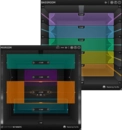


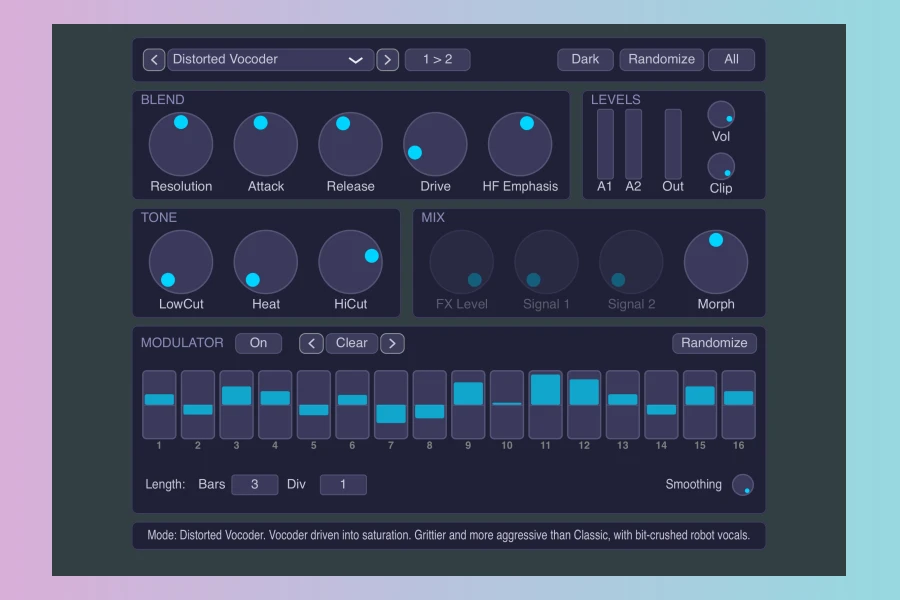
Snorkel Audio has recently introduced Wave Collider, an innovative audio effect designed to combine two distinct audio signals through a selection of 22 unique blend modes. Unlike traditional effects that process a single track, Wave Collider operates by taking two separate inputs and “colliding” them, thereby generating complex and original sound textures. This approach offers a fresh perspective on sound design, enabling producers to create intricate sonic landscapes that would be challenging to achieve with conventional tools. The plugin’s architecture encourages experimentation, providing a versatile platform for transforming existing sounds into something new and unexpected. This dual-input functionality truly sets it apart from many other audio processing tools on the market, consequently opening up a wide array of creative possibilities for electronic music producers.
The 22 blend modes are thoughtfully categorized into five distinct families, each offering a different sonic character. For instance, the Spectral family includes classic vocoder effects such as the Classic Vocoder, FFT Vocoder, and Distorted Vocoder, alongside more unique options like Frequency Splice, Spectral Gate, Phase Swap, and Bin Interleave. It is noteworthy that the two filter-bank vocoders operate with zero latency, which is crucial for real-time performance and monitoring. Conversely, the FFT modes accurately report their latency to the host, ensuring proper delay compensation within your digital audio workstation. Furthermore, this attention to detail in latency management ensures a smooth workflow for users.
Moving beyond spectral manipulation, the Modulation family provides essential tools like FM (phase modulation with feedback), AM, and Ring Modulation, allowing for classic synthesis techniques to be applied to your audio inputs. Furthermore, the Time family introduces “Scrub,” a distinctive playhead-warping effect whose behavior is dynamically driven by the amplitude of the second input. Meanwhile, the Stochastic family features “Probabilistic,” a per-sample coin-flip mechanism that alternates between the two sources, complete with hold and crossfade controls for nuanced blending. In addition, the Dynamics family offers practical effects such as Sidechain Duck and Amplitude Follow, providing rhythmic and reactive processing options. Lastly, the Math family comprises eight per-sample operators, including Min, Max, Add, Subtract, Absolute Difference, Divide, Sign Multiply, and XOR, which enable precise and often extreme audio transformations. This comprehensive selection of modes ensures versatility for various sound design needs.
Each of Wave Collider’s 22 modes comes with its own dedicated parameter set, offering deep control over the blending process. A convenient Direction toggle allows users to swap the carrier and modulator roles on asymmetric modes, significantly expanding the creative possibilities. Moreover, a single-knob Morph macro facilitates a smooth crossfade between the dry input signals and the wet, processed result, making it easy to dial in the desired blend. The plugin also features a tempo-synced 16-step modulator, which can animate the blend dynamically in time with the host DAW. Importantly, every parameter within Wave Collider, including the mode selector itself, is fully automatable and MIDI-mappable. This extensive control ensures that the effect can be integrated seamlessly into complex productions and live performances, consequently offering a high degree of flexibility.
Features
- 22 unique blend modes organized into five families: Spectral, Modulation, Time, Stochastic, Dynamics, and Math.
- Dual input processing for combining two audio signals.
- Zero-latency filter-bank vocoders; FFT modes with host delay compensation.
- Dedicated parameter set for each blend mode.
- Direction toggle for swapping carrier/modulator on asymmetric modes.
- One-knob Morph macro for dry/wet crossfading.
- Tempo-synced 16-step modulator for dynamic blending.
- Full automation and MIDI mapping for all parameters, including mode selection.
- Available for macOS, Windows, and iOS in VST3 and AU plugin formats.
Price
Intro: 14.00 € (until June 10, 2026)
Regular: 29.00 €
👍 Pros
- ✓ Dual input blending with 22 diverse and creative modes.
- ✓ Comprehensive modulation and automation capabilities with a 16-step modulator and MIDI mapping.
- ✓ Cross-platform compatibility across macOS, Windows, and iOS with VST3 and AU formats.
👎 Cons
- ✗ Requires two distinct input signals, which may add complexity to some setups.
- ✗ Introductory price is temporary, with the regular price being significantly higher.
More info: Snorkel Audio | Wave Collider
HIT OR SHIT Indicator
💩
Indication by Noizefield
Average Indication by Readers
🚀
What do you think?
Hit or Shit? Please rate from 1 (💩) to 10 (🚀)
✅ You already voted. Thanks!
Check these out!