

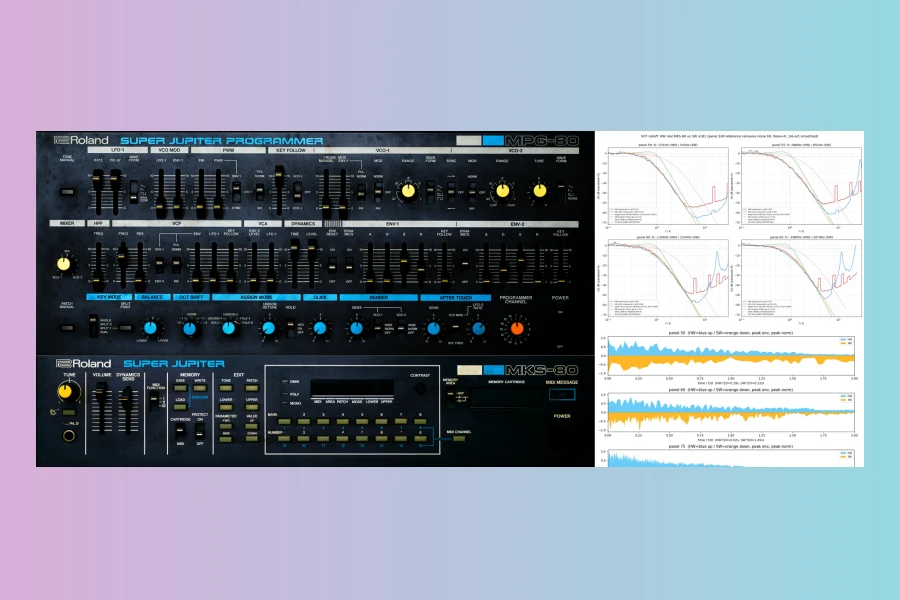
Jun Murakami, a seasoned composer and music producer, has officially launched Synth-80, a new software synthesizer. This instrument is meticulously designed to emulate the legendary Roland MKS-80 Super Jupiter (Rev.4). The release aims to bring the distinctive sound of the MKS-80, an 8-voice polyphonic analog synthesizer from 1984, to modern digital audio workstations. Furthermore, the developer positions Synth-80 as the world’s first full-fledged MKS-80 Rev.4 emulator. The development process involved an extensive and detailed analysis of the MKS-80. Jun Murakami utilized over 100 dedicated automated measurement programs. These programs covered every circuit and parameter of the hardware unit. Consequently, this allowed for precise capturing of detailed analyses. This enabled the software to faithfully recreate the original’s nuances. This long-term analysis, coupled with rigorous audio DSP tuning, was carried out in parallel with the software programming. The primary goal was to achieve an authentic sound. For many patches, it is virtually indistinguishable from the hardware when played side by side.
Authentic Sound and Intuitive Interface
Synth-80 meticulously recreates the sound texture of the MKS-80. This includes everything from the delicate characteristics of its filters to the subtle nuances of its noise oscillators. This attention to detail elevates the level of hardware emulation. Moreover, the synthesizer features a simple, stripped-down user interface. This design philosophy focuses on making sound design enjoyable and straightforward. All parameters are presented on a single screen. For instance, hovering the mouse over a parameter highlights its related module. This makes the signal flow clear at a glance, a beneficial feature for beginners.
Advanced Effects and Hardware Integration
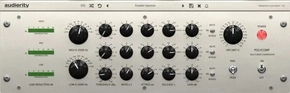
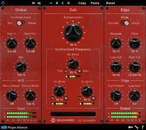
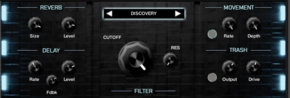
A notable aspect of Synth-80 is its high-quality built-in effects section. These effects are designed to a professional standard. Interestingly, they are also available as a standalone audio effect plugin, known as Synth-80 FX. The chorus section is particularly robust, offering four distinct models. These include Synth Chorus, Studio Chorus (inspired by Roland Dimension D), Pitch Chorus (Eventide-inspired), and Digital Chorus, which provides extensive parameter control. In addition, the plugin incorporates a versatile reverb with Hall, Plate, and Room algorithms. There is also a compressor utilizing the ZeroComp algorithm. Together, these provide powerful support for sound design. For owners of the original hardware, Synth-80 offers unique integration. It functions as a comprehensive editor and librarian for a real MKS-80 unit. This functionality includes patch bulk-dump send/receive, a bank builder, and edit-parameter exchange. However, it is important to note that the MPG-80 cannot be used as an editor for this plugin due to the hardware’s MIDI-output specifications. Due to its complex and detailed modeling, Synth-80 is not a lightweight synth in terms of CPU usage. Therefore, users are encouraged to try the demo version in their own DAW to assess performance. In return, the developer promises a sound truly worthy of the processing cost.Features
- Authentic MKS-80 Rev.4 emulation
- Simple, single-screen user interface with visual signal flow
- Four high-quality, independent chorus models (Synth, Studio, Pitch, Digital)
- Built-in reverb (Hall, Plate, Room algorithms) and ZeroComp compressor
- Standalone Synth-80 FX plugin included
- Editor and librarian functions for hardware Roland MKS-80 (patch bulk-dump, bank builder, edit-parameter exchange)
- 150+ factory presets
- Available in Standalone, VST3, AU, and AAX formats (64-bit)
- Supports Windows 10+ and macOS 11+ (Intel / Apple Silicon native)
Price
Intro: $59.00
Regular: $99.00
👍 Pros
- ✓ Meticulously modeled emulation of the Roland MKS-80 Rev.4, delivering authentic sound.
- ✓ Intuitive single-screen user interface with visual signal flow and high-quality integrated effects, including four distinct chorus models.
- ✓ Unique functionality as a comprehensive editor and librarian for the original MKS-80 hardware.
👎 Cons
- ✗ Higher CPU usage due to complex modeling.
- ✗ Focused emulation may offer less general-purpose sound design flexibility compared to other synths.
More info: Jun Murakami | Synth-80
HIT OR SHIT Indicator
💩
Indication by Noizefield
Average Indication by Readers
🚀
What do you think?
Hit or Shit? Please rate from 1 (💩) to 10 (🚀)
✅ You already voted. Thanks!
Check these out!