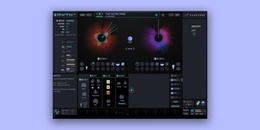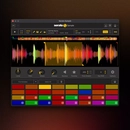


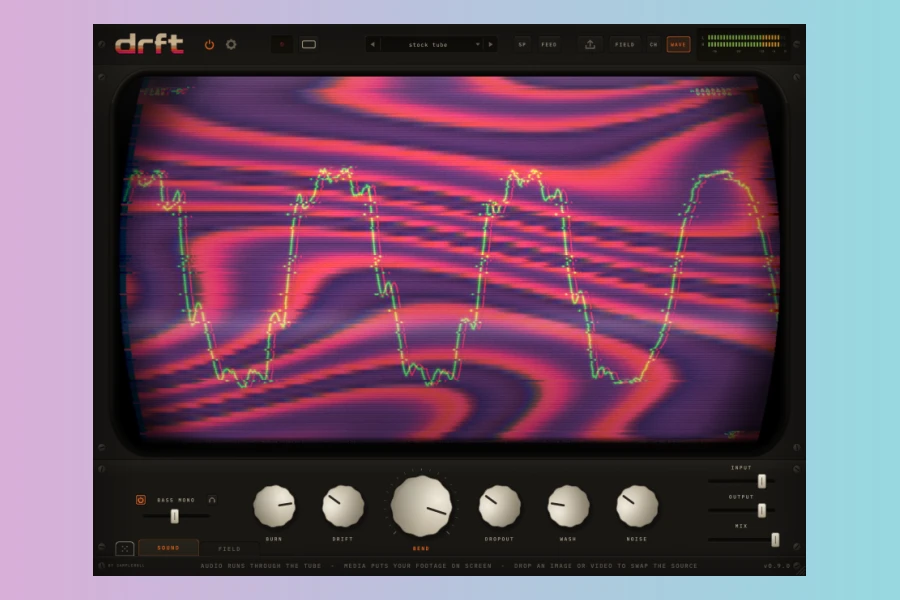
SampleRoll has released drft, an audio effect and visual processor inspired by circuit-bent CRT televisions, damaged tape machines, and unstable analog video hardware. This unique tool combines sound mangling with real-time visual degradation, creating a cohesive multimedia experience. It is available for $19, making it an accessible option for producers seeking experimental textures.
Inspired by Malfunction
Drft is built around the idea of making audio and visuals malfunction together. Its processing affects both the sound and the built-in CRT display. Consequently, dropouts tear the image, pitch instability bends the picture, and heavier degradation pushes the tube further out of sync. This integrated approach sets it apart from typical effects.
Core Sound-Shaping Controls
At the center of drft are six main character controls: bend, burn, drift, dropout, wash, and noise. These cover bit-starved digital damage, tape saturation, wow and flutter, smeared dropouts, haze, stereo width, and dynamic hiss. Moreover, additional tools include a Bloom BBD-style chorus, optional Room ambience, bass mono processing, dry/wet mixing, and input/output controls. Users can choose from SP, LP, or EP tape modes and adjust varispeed by ±5 semitones.
Real-Time Visual Processing
The CRT reacts in real time with effects inspired by physically modified televisions. These include sync tearing, chroma separation, tracking errors, vertical roll, static, barrel warp, scanlines, and phosphor persistence. Furthermore, drft can process external visuals. Users can load PNG, animated GIF, MP4, and MOV files, connect a webcam, iPhone, capture card, or other video device. Alternatively, they can generate visuals using 20 built-in FIELD generators, such as plasma, tunnel, rings, spiral, kaleido, moire, caustic, aurora, smoke, stars, and cells.
Interactive Audio-Visual Feedback
Visuals can react directly to the incoming audio. In addition, FEED mode reverses this relationship, allowing image characteristics to influence sound processing. This creates a dynamic feedback loop. As a result, the tool becomes a performance instrument rather than just an effect.
Export and Integration
The CRT is also an export surface. Drft can record a performance and render processed audio and visuals together as a synchronized 1080p MP4 at 30 or 60 fps. It supports 16:9, 9:16, and 2.75:1 visual formats. Additionally, factory presets, randomization, and full automation are included. The interface is resizable for flexible workflow.
Features
- Inspired by circuit-bent CRT televisions and damaged analog video hardware.
- Six primary character controls: Bend, Burn, Drift, Dropout, Wash, and Noise.
- Bit degradation, tape saturation, wow/flutter, haze, hiss, and tape-style dropouts.
- Bloom BBD-style stereo chorus.
- Optional Room ambience.
- SP / LP / EP tape modes.
- ±5 semitone varispeed.
- Bass mono processing.
- Reactive CRT oscilloscope display.
- Sync tears, chroma split, tracking errors, roll, static, warp, and phosphor persistence.
- Load PNG, GIF, MP4, and MOV visuals.
- Live webcam, iPhone, capture-card, and virtual-camera support.
- 20 built-in FIELD generators.
- Audio-reactive visual modulation.
- FEED mode lets visual content influence audio processing.
- Export synchronized audio and visuals as 1080p MP4.
- 16:9, 9:16, and 2.75:1 visual formats.
- 30 and 60 fps export.
- Factory presets, randomization, and full automation.
- Resizable interface.
Price
Intro: $19.00 (USD)
Regular: $19.00 (USD)
Pros
- Integrated audio and visual processing
- Wide range of sound-shaping controls
- Affordable price at $19
Cons
- Limited platform support (no Linux)
- Visual output may not suit all workflows
More info: SampleRoll | drft
HIT OR SHIT Indicator
💩
Indication by Noizefield
Average Indication by Readers
🚀
What do you think?
Hit or Shit? Please rate from 1 (💩) to 10 (🚀)
✅ You already voted. Thanks!
Check these out!