

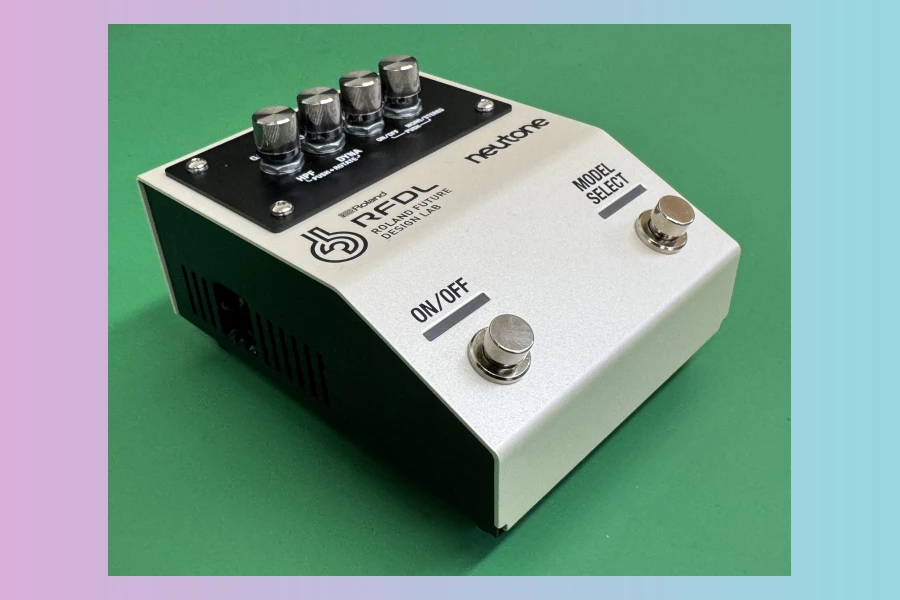
Roland has unveiled an intriguing new development known as Project LYDIA Phase 2, a groundbreaking AI-powered pedal that promises to revolutionize sound manipulation. This innovative prototype, showcased at Superbooth 2026, leverages advanced neural sampling technology to enable real-time sound transfer. In essence, it allows any input sound to be transformed and overlaid onto other signals instantly, opening up a wealth of creative possibilities for musicians and producers.
The Power of Neural Sampling
At the core of Project LYDIA Phase 2 is its sophisticated neural sampling engine. This technology goes beyond traditional effects processing, which typically applies static algorithms to audio signals. Instead, neural sampling intelligently analyzes the sonic characteristics of a source sound and learns its unique qualities. Consequently, it can then apply these learned characteristics to a different target signal, effectively making one instrument sound like another. For instance, as demonstrated with a guitar sounding like a trumpet, the system captures the timbral nuances, attack, decay, and overall sonic signature of the trumpet and imposes them onto the guitar’s output.
Real-Time Transformation for Creative Expression
The real-time aspect of Project LYDIA Phase 2 is particularly noteworthy. This means that musicians can experiment with radical sound transformations during live performances or studio sessions without any noticeable latency. Imagine a guitarist instantly shifting between the sound of a violin, a synthesizer, or even a human voice, all through the expressive control of their instrument. Moreover, this capability extends beyond guitars; the system is designed to transfer any sound onto other signals, suggesting vast applications across various instruments and audio sources. Therefore, it could become an invaluable tool for sound designers, electronic music producers, and experimental artists seeking unprecedented sonic textures.
Future Implications and Prototype Status
While Project LYDIA Phase 2 is currently a prototype, its potential implications for electronic music production are significant. It represents a leap forward in AI-assisted audio processing, offering a level of flexibility and creative freedom previously unattainable. As the technology develops further, we can anticipate even more refined and versatile applications. However, as with all prototypes, it is still under development, and specific details regarding its final features, form factor, and commercial availability remain to be announced. Nonetheless, Roland’s demonstration at Superbooth 2026 signals an exciting future for real-time sound manipulation in the music technology landscape.
Pros
- Real-time sound transfer capabilities
- Utilizes innovative neural sampling technology
- Offers versatile sound transformation (e.g., guitar to trumpet)
Cons
- Currently a prototype, not commercially available
- Specific technical limitations or detailed features are not yet public

More info: Roland | Project LYDIA Phase 2
HIT OR SHIT Indicator
💩
Indication by Noizefield
Average Indication by Readers
🚀
What do you think?
Hit or Shit? Please rate from 1 (💩) to 10 (🚀)
✅ You already voted. Thanks!
Check these out!