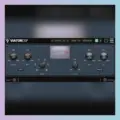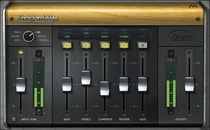


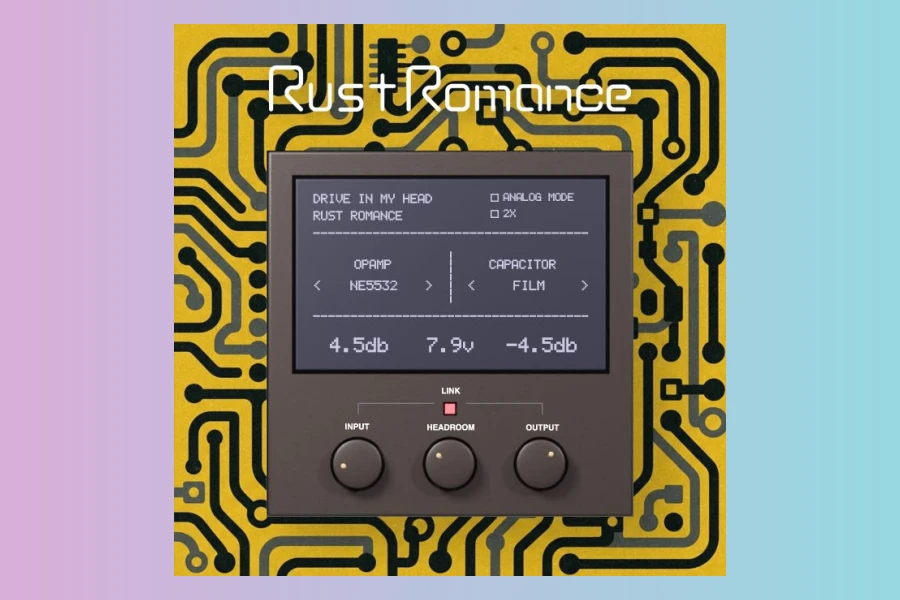
Rust Romance has released Drive in my head, a new physically modeled op-amp line-stage plugin. It is available for free for both Windows and macOS users. This plugin emerged from the developer’s experience with hardware modification, specifically swapping op-amp components in audio equipment. The core idea behind Drive in my head is to infuse mixes with the subtle, authentic character of analog amplification stages, rather than overt distortion.
Subtle Analog Character for Digital Sound
Unlike typical saturation plugins, Drive in my head does not aim for extreme overdrive or fuzz effects. Instead, it seeks to replicate the nuanced sound of a signal passing through a real analog amplification stage. This includes the gentle compression from a genuine feedback loop, the characteristic tilt of a coupling capacitor, and the slight drift of a power rail. For instance, producers can utilize it on virtual instruments that sound too clean or “digital,” helping them integrate better into a mix. Similarly, it can add weight to sample-based drums or give virtual synths a more “hardware” feel. Consider it akin to processing a DI signal through tape, where the objective is to alter the “feel” without dramatically changing the numbers.
Fifteen Op-Amps, Fifteen Characters
The plugin incorporates 15 distinct op-amp models, each meticulously crafted from its real-world data-sheet specifications. These specifications include gain-bandwidth, slew rate, output swing, open-loop gain, and topology. Consequently, the character of each op-amp emerges directly from its underlying physics, rather than relying on pre-defined curves. The selection spans a wide range, from hi-fi studio standards like the NE5532 and TL072 to reference-grade units such as the OPA627. Moreover, it includes discrete Class-A models like the BA283 and even deliberately “cheap-and-charming” options like the LM358 and TDA2030. Sweeping through these op-amp selections allows the same signal to acquire different weights, thicknesses, and top-end qualities without needing additional tone adjustments.
Five Coupling Capacitors for Vintage Tones
Following the op-amp stage, the signal passes through a coupling capacitor before exiting the plugin. These capacitors play a crucial role in shaping the “vintage” sound often associated with older recordings. Drive in my head provides five distinct coupling capacitor types. These include “None” for a direct-coupled, uncolored signal, “Film” for clean transparency, and “Oil” for a subtly rolled-off high end reminiscent of classic gear. Furthermore, “Electrolytic” offers a clear softening of the top end, while “Aged aluminium electrolytic” simulates the reduced capacitance and higher equivalent series resistance of an old, worn-out capacitor from 80s or 90s consumer electronics. This last option provides an immediate pathway to a lo-fi, aged sound.
Advanced Features: Analog Mode and 2X
The plugin also features an Analog Mode, which introduces subtle imperfections found in real amplifiers. This mode injects a slow residual ripple into the simulated power rail and a gradual drift into the input offset voltage. As a result, the plugin’s overall character gently “breathes” over time, creating a more organic and less static sound. It is designed to be subtle, enhancing realism rather than acting as an obvious modulation effect. Additionally, the 2X mode sends the signal through a second identical copy of the selected op-amp and capacitor stage in series. This effectively doubles the chosen coloration without boosting distortion, proving useful when a more pronounced character is desired in a dense mix.
Under the Hood and Target Audience
Technically, Drive in my head is built upon Wave Digital Filter theory, utilizing the chowdsp_wdf library and a custom non-linear feedback ODE solver. This sophisticated approach ensures that closed-loop gain, bandwidth, saturation recovery, and rail clipping all emerge naturally from the modeled circuit’s physics. Therefore, the plugin appeals to producers who appreciate circuit-modeled tools over curve-based solutions. It is particularly well-suited for those who produce with virtual instruments and want them to sit better in a mix, mix in-the-box and miss the feel of hardware line stages, or design sound with a lo-fi or vintage aesthetic.Features
- 15 op-amp and amplifier characters
- 5 coupling capacitor types
- WDF-based circuit-oriented modeling
- Analog Mode
- 2X linked-stage mode
- Automatic output level compensation
- VST3, Audio Unit and standalone formats
- Windows and macOS support
Price
Free
Pros
- Physically modeled op-amps and capacitors for authentic analog character.
- Wide selection of 15 op-amp models and 5 coupling capacitor types for diverse tonal shaping.
- Automatic output level compensation and subtle Analog Mode for enhanced realism.
- Available completely free for Windows and macOS.
Cons
- Not designed for obvious distortion, which may not suit users seeking aggressive saturation.
- Requires a one-time license key activation despite being a free download.
More info: Rust Romance | Drive in my head
HIT OR SHIT Indicator
💩
Indication by Noizefield
Average Indication by Readers
🚀
What do you think?
Hit or Shit? Please rate from 1 (💩) to 10 (🚀)
✅ You already voted. Thanks!
Check these out!